Friday, August 30, 2019

Reading is a System Not a Race


I've been working so much this month that my reading has been mainly work related rather than leisure reading. I cannot always use reading books to unwind because I do not do well with having to stop reading when it's not a natural break in the story. When I have a specific time I have to stop to go to bed or transition a task, I cannot predict that I will be at a natural break point. For me, that is not relaxing so I don't do it. Instead, I have spent a bit of time playing/reading on Wheel of Fortune, Jeopardy, and Bubbles on my tablet to unwind at the end of many long days. I am not a full proponent of using video games or screen time for kids to unwind but I also know that there can be some value and find that to be leading my reading related musings today.

Reading is a system of tools we use to make meaning from information (text and symbols). Reading requires many areas of the brain working together as a complex system. Sometimes, it can be just as beneficial to work on one area of that system rather than all to keep the system working smoothly.

As a parent, I had to teach myself that my kids were developing their reading skills even if they weren't sitting and reading a traditional book. As a teacher, I have these conversations with students and parents on a weekly basis. I also find myself having these conversations with administrators on behalf of teachers and parents on a fairly regular basis. We all want what's best for kids and reading is a significant area of concern (as it should be). Today is just a reminder that reading is not a race; there is no finish line.


Thursday, August 15, 2019

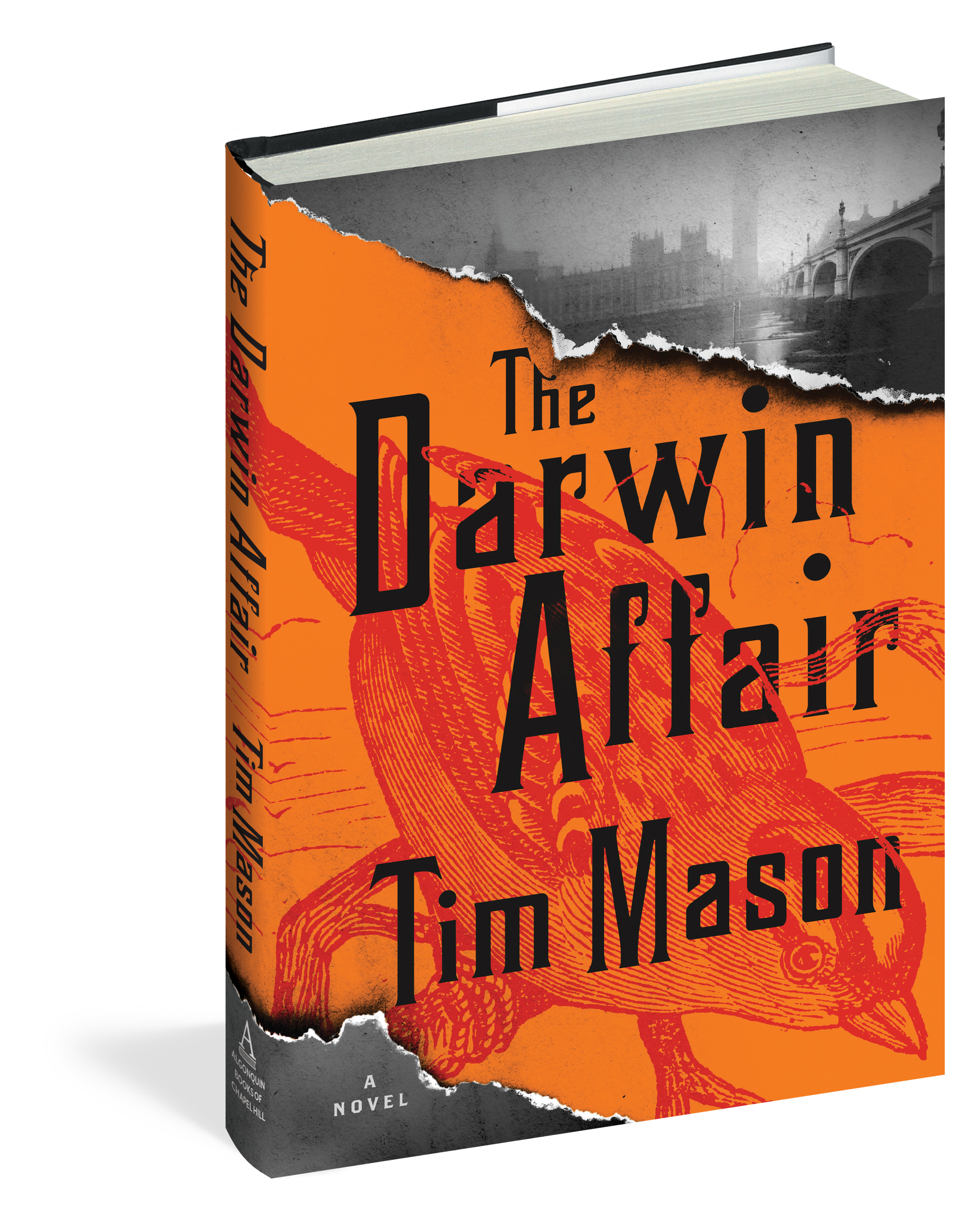
The Darwin Affair


Just like most of what I read for pleasure, The Darwin Affair is not a scholarly text. It was a historical fiction novel that I read for pleasure. But, that does not mean that I don't grow my mind when reading it. I am of the opinion that a good thing novel from any genre can expand one's thinking.

History and Fiction

I do not totally know which pieces of history in this story were accurate and which were fictionalized but I definitely know that Charles Darwin shook things up during his time. This story incorporated the impact Charles Darwin's Origin of Species had on those with privilege. His writings required a change in thinking. If all humans evolved from similar origins than the concept of class being determined by birth was definitely a construct rather than a natural order. It was interesting to see how Mason incorporated this struggle into the thoughts and motivations of many characters of all levels of the class structure.

He also included descriptions and story related to the development of an evil mind; again, the concept that an evil nature may not be determined at birth but through development and experiences. This humanness was also quite evident in the inspector's actions and motivations. Good people do not always do good things. While this added more darkness than I sometimes prefer for my leisure reading, I appreciated that it was truly reflective of real life and totally fit the nature and structure of the novel.

Format & Reading Experience

With this novel, I did find that I struggled with reading it on an e-reader. Without the paper novel, I did not have any constant reference to how close I was to the end. Yes, there are ways I can check what my percentage of progress is in the book but when a book is hefty in content as well as pages, there is something more orienting and perhaps reassuring when I can literally feel my progress through the story.

I do not like sudden stops when I'm reading. It is difficult for me to put a story down when it is not a natural stopping point like the start of a new chapter or change in story arch. This novel was a longer one and not one I could read in one sitting and I found I was sometimes distracted by not knowing how much longer I could be reading. I would get tired and reading until the next natural break but didn't know when that would be; ordinarily, I flip through the pages and place my bookmark where the next chapter starts so I have some kind of guide.

None of these challenges were enough that I stopped reading the novel all together, but I am an adult. I find myself reflecting on that experience for it's relation to engaging reluctant readers - of any age. I believe we need to be cautious with requiring specific formats for reading materials depending on what our purpose is on having people read them. If I was not already a prolific reader, I might have really needed to have the paper copy of this book to get through it and remember any of what I had read. This story had enough content that I had questions about that, if I had to use it for some kind of study, I would have preferred a paper copy so I could insert notes on post-it notes to refer back to.

Expanded Thinking

This novel ended up in my reading journal because it did just that. My mind came up with many observations about how society changed because of the publication of one book by Darwin. It also expanded my thinking on using ebooks and paper books in my work with struggling readers.

Do you have thoughts about your experiences with reading different books in different formats? Do you prefer paper books or ebooks or audiobooks? I'd love to hear about it! Leave a comment below. 

Sunday, August 4, 2019

Getting Cozy with Criminally Cocoa


Cozy mysteries might not be designed to drive deep thought or interpretation, but reading is personal and experiences when reading often depend on the context of the reader's experience as much as the context within the story. I enjoy reading books in a series, especially cozy mysteries, because I find them relaxing. There is a bit of puzzle to engage my ADD brain, enough "people" story to engage my social brain, and it doesn't really require much direct effort on my part to process the story line or participate in the interactions. With the really good ones, I find that I often end up interacting then with more of the story parts . . . human interactions or places I've never visited. I end up thinking some deep thoughts related to something a character said, did or observed.

Interacting with Characters


Readers interact with many parts of story outside of the main plot - characters, places, thoughts, and sometimes even just the words. Sometimes a character can make an observation that is not necessarily central to the plot but can be central to the reader's appreciation or interaction with the story. Such was my experience with Criminally Cocoa, a novella in the Amish Sweet series by Amanda Flower.

Reading Experience

Bailey King is the main character in the Amish Sweets series, but Criminally Cocoa was focused on Charlotte Weaver, a young Amish girl who assists Bailey in her candy shop and on her new cooking show. Charlotte is at a point in her life when she is trying to determine what she wants and who she is. She left her district because of her love of playing the organ. She lives with her cousin, who is also Bailey's grandmother, whose district allows organ playing. In this story, Charlotte has traveled to New York City to help Bailey in taping a new cooking show. One reason, Charlotte is able to assist with such a project is because she is on rumspringa, a time for young people to explore the world and decide if they will be committing their lives to the Amish faith or leaving the faith for the larger world.

In chapter 8, Charlotte experiences her first morning in New York City. She witnesses a sunrise totally different than what she is used to in Ohio. She was mesmerized and noticed that others were not:
"Perhaps, I thought, everyone grows numb to the beauty that surrounded them; only when something is different does it stand out". 
I absolutely adored this observation and took time to jot it down in my reading journal. If I was studying this text for some reason, I might not have had the time or luxury to cue in to this statement. It would depend on what type of group or assignment I was reading it for - purpose of reading often drives the actual experience of interacting with a story - but it is possible that this line could have stood out anyway. It was definitely related to Charlotte's character in the sense that she was trying to understand the world around her and her place in it. She didn't believe that she was anything but plain and could have been considered somewhat numb to her own beauty. The story of course, was focused more on a murder on the set but this reflection is a part of Charlotte's story line and became part of my memory of reading this story.

Text-to-My-World

I work with people with learning disabilities. One trait of many of the people I work with is to focus so much on their challenges that they do not always see the beauty of their strengths. Many times, when they can do something well, they become numb to the fact that it takes work at all. They do not realize that it is different, instead there becomes a mentality that "if it's easy for me, it is easy for everyone". They see the part of them that is different, the part that stands out most, as the things they are challenged by. They become numb to the beauty of their strengths, as do many around them.

The goal for all is to get that good grade or to finish a whole book. That is what is expected, and what is gotten from most of the students. As adults, we can become numb to the beauty of what an accomplishment it can be for those children who are different. We do not always take the time to celebrate these accomplishments, particularly if they happen for the first time when a student is older than first or second grade. We don't want to embarrass them or draw attention to  their challenges. I would posit that we then create a culture that is numb to the beauty of accomplishment for all students.

Even those who are traditionally successful can be encouraged to celebrate accomplishments - large and small. All students can be encouraged to see that accomplishments are personal, not uniform. For some, it is passing a test rather than getting an A. As teachers and parents, it's our job to help children learn how to respond to these differences rather than be numb to the beauty in their accomplishment.


What does the quote from Charlotte bring to your mind? I'd love to hear it! Leave a comment below. 

Wednesday, July 31, 2019

Comprehension Connections with Hank Zipzer and Dreams Fulfilled


My Initial Experience with Hank

I love Hank Zipzer, particularly the story Day of the Iguana, most likely because I read it with Garen, Marie and Joe. All three were at completely different places in their reading development though they were pretty much the same age. We met for 35 min four days a week for a Reading Intervention class. Garan was our group's "Hank" and, that year, he was very interested in lizards which made this a story I just had to incorporate into this reading group.

We worked with Day of the Iguana through read-aloud. We discussed characters and story line. We made inferences and worked with strategies for active listening and comprehension. We worked with vocabulary and making connections. We most certainly  discussed impulsivity quite a bit as we experienced Hank's escapades. That's also when we started doing some podcasting. I don't think we did one for Hank, but I know that the concepts of iguanas definitely took over that year and that I still smile whenever I think of it and those three different learners. 

Text-to-Self

A few weeks ago, the August 2019 issue of Costco Connection magazine arrived in my mailbox. The cover highlight was "Dreams Fulfilled", an interview with Henry Winkler about his experiences with dyslexia and the adventure of Hank Zipzer. I found myself immediately smiling and remembering the year of the iguana in my reading class. There was no way I was not going to read this article!

The article "Dream Fulfilled" was a good article. Henry Winkler was diagnosed with dyslexia as an adult. Would he have been as successful if he had known about it when he was a kid? I believe it's possible. His experiences would have been different yes. Most likely he would have been less damaged, but he still would have had to work just as hard at stuff that mattered. Maybe he could've done so without all that damage but would he have learned to persevere so well? He would have had to. Dyslexia is like that. Knowing why something is hard doesn't make the actual act of reading or writing easier but knowing why and understanding can definitely take away some of the emotional frustration.

Text-to-Text

Winkler mentions "just try" (p. 36) and "we know what we are good at" (pg. 38). Last year, I watched Road Trip Nation's Being Understood Roadtrip with my seniors. There was a similar message in that film from the successful individuals with learning disabilities.  It is an important message and perseverance is  a needed attribute for success; one of the main reasons I use this film in my Seminar classes. Last year, one of my seniors helped me see this concept a little differently. His response to the film was, "But what if we don't?". 

When Jax made this observation from the film, his classmates were actually quite upset. They thought he was being disparaging and negative rather than embracing the full message. I couldn't help but wonder if perhaps he got the message better than most. It is important to help  young people interpret and apply the concept of perseverance and not giving up, however, helping them understand that figuring out what you want or what you should try is actually a process, not an event is just as important.

Perhaps this is a big reason Garan, Joe, Marie and I enjoyed the experience of reading Hank Zipzer; or maybe just the reason I enjoyed it so much. Hank is a kid and is not quite as reflective as an adult. His thoughts and experiences were real to them and we used them as catalysts for different types of discussion and reflection. Hank's challenges were not summed up or conquered in one story and he was not always so sure that not giving up was possible. He did keep trying and found successes but he helps illustrate that it's not as smooth going as it might sound when we sum it up years later, similar to what adults call stories from "in the trenches" rather than the summaries after events are all over and the conclusions are known.

Jax knew what he was good at but didn't feel he just knew. He knew why reading and writing were hard for him. He knew he had strengths but he did not know what his inner inspiration was. He only knew that he was still working on finding himself and connecting to a passion. He did not want to pretend otherwise. His concern and observation were admirable. His observation is also one of the challenges for motivating smart children like those with learning disabilities. Some see words as words, not inspiration. They may know the why, but they don't know the what to do about it or the how to use their gifts to sustain themselves.

Text-to-World

We need to provide more than motivational speeches or films or texts to build their success. We must provide opportunities to succeed as well as opportunities to fail with opportunities to discuss or analyze those experiences (without judgement) to provide learning and growth. That is one of the main messages I came away with from reading the interview with Winkler. He was able to articulate and appreciate his successes because he has been able to reflect on them.  The reflection is a main component in his success, not just the "trying".

We need to incorporate these "in the trenches" type discussions alongside the high level, inspirational examples we provide. This balance could also help us teachers and parents help kids embrace the kindred spirits like Hank Zipzer rather than them seeing those stories as having to read "another book about being LD".


*********************************************************************************
* Garan, Joe and Marie were the student's name choices for publishing our podcasts. Jax's name is a pseudonym.

Do you have an experience with Hank Zipzer or an impactful reading memory you'd like to share? I'd love to hear it! Leave a comment below. 

Monday, July 8, 2019

French Connections

This morning, I finished up Murder in Bel-Air by Clara Black along with my coffee. This one is part of a series that I checked out from e-books at our local library. Since it was from the library, I take what I can get with e-books so started this series with #19 instead of #1.

Vocabulary and Background Knowledge

When I had to take foreign language in high school and college, I studied Spanish and German, so never had any French other than souffle, croissant, and the basics like greetings, salutations and a few simple swear words. I managed to expand my vocabulary some while reading this story through a few context clues as well as through Google (good readers use tools!). 

I am a strong reader but I did find myself struggling some when reading this novel. I have some knowledge of sound-symbol relationships with french words since I'm a word nerd, but needing to think so deliberately about pronunciation slowed me down a little. I also realized that I have never read very much about France or French history which meant I had to work a little harder than normal to comprehend all the connections in this particular story. I had to look up Abidjan to really see where it was. I looked up Ivoirian and then realized it was related to Ivory Coast. I do wish I would have looked that part up when it first came up in the story rather than at the very end. I went through the whole story not knowing anything about Cote d'Ivoire, but I definitely have some background knowledge about the Ivory Coast.  Part of me felt a little stupid not knowing those things already while another part of me knew that it's not possible to know everything. That's one reason I choose to read - to expand my mind and my knowledge base. And, since I was reading for pleasure, rather to study for a test or answer comprehension questions, it didn't really matter in the long run what I knew when. (Purpose for reading really makes a difference!)

A Mom Moment

I chose this book because it looked interesting and because of the Around the World in 80 Books challenge. I was looking for a book set in France. I read it yesterday and today and realized this morning that while I've been reading it, my youngest daughter was actually in Paris with her high school band on their trip. I didn't a lot of Paris specific experiences per se, but it was a connection which created that little "awww" moment as I thought about it and added to my enjoyment of my reading experience. It made this experience a little different than it would have been last week or even next week. A slightly different context for me and one reason I enjoyed this story.

A Cherished Memory

The main character in this series by Black is Aimee Leduc, a private investigator in Paris, France. I naturally enjoyed the fact that the main character and I shared the name Amy but not until I read the interaction between Aimee and her mother did I really connect. Aimee's mother is (potentially) an asset for the CIA. When Aimee and her mother were talking, Black used Amy as the spelling for Aimee's name. I have always been Amy-with-a-y; except to Great-Uncle Rich.

My mom was an only child but she had one uncle who was only a few years older then her. They grew up together and were always close. As adults, mom stayed in West Michigan while her uncle became a fashion designer and moved out to the Bay Area. I remember him visiting when I was a little girl. He drove an orange convertible VW bug. I loved when Great-Uncle Rich came to visit because it meant mornings of my dog and I spoiling his sleeping in on our little twin guest bed so he could take me on adventures around town in The Bug. Adventures which always included a visit to his Aunt Win who made the most amazing chocolate cake I had ever had.

I always knew when a card or note was from Great-Uncle Rich because he never wrote my name as Amy. He didn't really write it Aimee either -  I think it was always Ami - but as soon as I saw the American spelling in that conversation between Aimee and her mother, it immediately brought to mind Great-Uncle Rich and his choice to always write my name in a more European fashion.  One story was that he did it because he knew it irritated my dad. I don't really know. I only knew that he we a designer and always did his own thing. I appreciated that about him but it was also something special for just us.

Great-Uncle Rich died when I was in middle school so it's been quite some time since I received a card or note for Ami. When I read about Aimee's Chanel and Louboutin, I wondered if those would've been choices okayed by Uncle Rich or if he would've been a student of some other fashion camp (I also sent up silent thanks to cousins Morgan and Kara since without them I'm not sure I would have known what Louboutin was!). When Aimee had to destroy her cashmere scarf , I actually laughed and wondered how Uncle Rich would've responded; would he have considered that survival or blasphemy.

I don't know where adventures in The Bug may have included as I would've grown into an adult or how I might have an actual understanding of fashion design if he had lived longer, but, for just a bit, I carried Great-Uncle Rich in my heart while I was reading a story and that made this reading experience one I will treasure for a while.


Saturday, July 6, 2019

Kicking it Off

A room without books is like a body without a soul. - Marcus Tullius Cicero


I honestly have no idea who Marcus Tullius Cicero is but I live the truth of these words. I cannot have  room in my house without books in it. I cannot work in an office space that has no books in it. I cannot travel without at least one book with me (usually more like three or four minimum). I don't really realize it, it just happens. After 24 years of marriage, my husband accepts this but he is still bewildered by it. My family has "rules" for going shopping with me and they set time limits if we are going anywhere near a bookstore, let alone inside one. The older I get, the more I realize that I am not the only one with this drive and passion. I also realize that reading, especially enjoying reading, is not a well understood concept.

Reading

In my experiences, I have seen that folks seem to think that there is some way "smart people" read and then there's everyone else. There are certain kinds of books that "smart people" read and then there's everything else. Over the past 20 years, we have learned a lot about what good readers do when they are reading AND with the information they read. We have learned that reading is so much more than being able to decipher text on a page; it is about interacting with that text.

For over 20 years, I have worked with (and lived with) children and adults who struggle with reading. These struggles come in all kinds of "shapes and sizes" and, in my experience, the most common misconception is that reading is an academic task that people either love, hate or tolerate. Reading is often seen as something we have to do all through our school years and then it's an option for leisure when we are adults. As adults, we categorize more: reading for work; reading for pleasure. For children, especially those who are learning reading related skills, reading is all for work. Adults work hard to help children become good readers. Unfortunately, this often translates to dictating their leisure reading choices. The thought process seems to be that if children are reading it should always be to learn and should include some type of challenge. It is less about interacting with the text than it is improving a skill. But which skill? Decoding strategies? Word recognition? Comprehension strategies? Building background knowledge? Developing vocabulary? Reading is a complex process involving multiple skills.

As adults, which skill do we focus on when we read? Most likely, none of the above. We are at the point where we are not using our time to read to improve a skill. We are generally past the work of learning to read all kinds of texts. It is thought that however we read when we are done with school is how we will read for the rest of time. The reality is, that as children, our brains are working to learn many different skills and many parts of our brains are working to sharpen the areas which control those skills. In adolescence, our brains are working to integrate all those areas and create efficient ways for those areas to work together as we process information. As adults, we don't even realize how many isolated and integrated skills go into reading because our brain has worked so well at streamlining the process.

Who Cares?

So what? Why would this knowledge drive me to actually create this space to blab about it? I return to the science of reading: reading is a complex process involving multiple skills and good reading is interacting with text. I think that what we often forget is that it also requires a lot of scaffolding and modeling. Many adults do not feel like good reading models for children because they do not feel like they understand reading well enough. They don't feel like they know how to teach reading. Well, they shouldn't. That is the job of us reading teachers. For adults who are not teachers working with students, our job is to support reading interactions.

Reading interactions are not always complex, in fact they are the basis of that concept that people either love, hate or tolerate reading. You don't have to love reading to be able to support reading interactions; you can just be honest. Supporting reading interactions does not have to be complex but it can be just as powerful as the teaching of complex reading skills. I share this idea with parents and teachers all the time and have been wracking my brain to find ways to help people understand this concept. How could I model this to help share not only my passion for reading but my knowledge on how to help grow better readers?  This blog space is the current result of my musing. I thought I'd try "walking the walk" in public.

What to Expect

I am a reading teacher, but I am also a parent and a reader. This space will be me sharing my own reading interactions as examples for parents and other readers. It will definitely have pieces of reading teacher "hat" but for the most part, it will be related to whatever I happen to be reading. With that in mind, here's a bit of a heads up of how that may play out.

Format

I do not write book reviews. In fact, I have always wondered why I cannot get myself to write book reviews. As I started this post this morning, I realized that it's because I interact too much when I read. Reviews to me are definitely in the category of critiquing and that by writing a critique I could influence some other reader's decision to pick up a title or author. In writing a review, I feel I am making some type of judgement on the writing of another writer, similar to grading a paper. I don't want to do that in my spare time; I do enough grading in my work time! I also know that I could change my mind in the future. Reading is often about context and context is influenced by experience and interactions. That's a long (and semi-therapeutic) way to explain why I have chosen to write about interactions rather than write book reviews.

Style

I have a degree in English and, while I am definitely wordy, I will not be writing as an English professor. I tend to write in a conversational way, particularly when talking about things I've read. It's taken me many years to realize that I am what could be considered an academic but I can pledge that I tend to talk very "real world" as well. Maybe that's the ADHD part of me, but it's also related to the fact that I spend much of my time talking with adolescents and needing them to listen to me.

Content

If anyone besides me actually reads this blog, I may lose some of my "street cred" as an academic since I read so much that would not be considered literature, but reading is about interactions not restricted to genres. I read just about anything, but most often I read brain research, education resources, juvenile and young adult fiction and fiction . . . . lots and lots of fiction. I read while I have coffee each morning, I read while I eat breakfast, I read while I watch TV with my family. . . .  I can read in the car, I read paper books, I read on my Nook, I read on my computer,  I sometimes read on my phone (mainly the news and Facebook updates).

I read to explore other cultures and places. I read to relax. Sometimes, I read because I need to find or learn something specific. I like puzzles. I also like closure and justice so I tend to read a lot of mysteries. I am a member of GoodReads and like to participate in group challenges for fun. The two challenges I am currently keeping track of is an A-Z challenge (reading  a title for every letter of the alphabet) and an Around the World in 80 Books (books set in different countries or cities) and am seeing if I can fill it with cozy mysteries so if you like cozy mysteries, you may enjoy some of the upcoming interactions the most.

My main goal is to shine some light on what reading interactions look like and, perhaps, help inspire some other readers along the way.